Phone:
(701)814-6992
Physical address:
6296 Donnelly Plaza
Ratkeville, Bahamas.
Phone:
(701)814-6992
Physical address:
6296 Donnelly Plaza
Ratkeville, Bahamas.
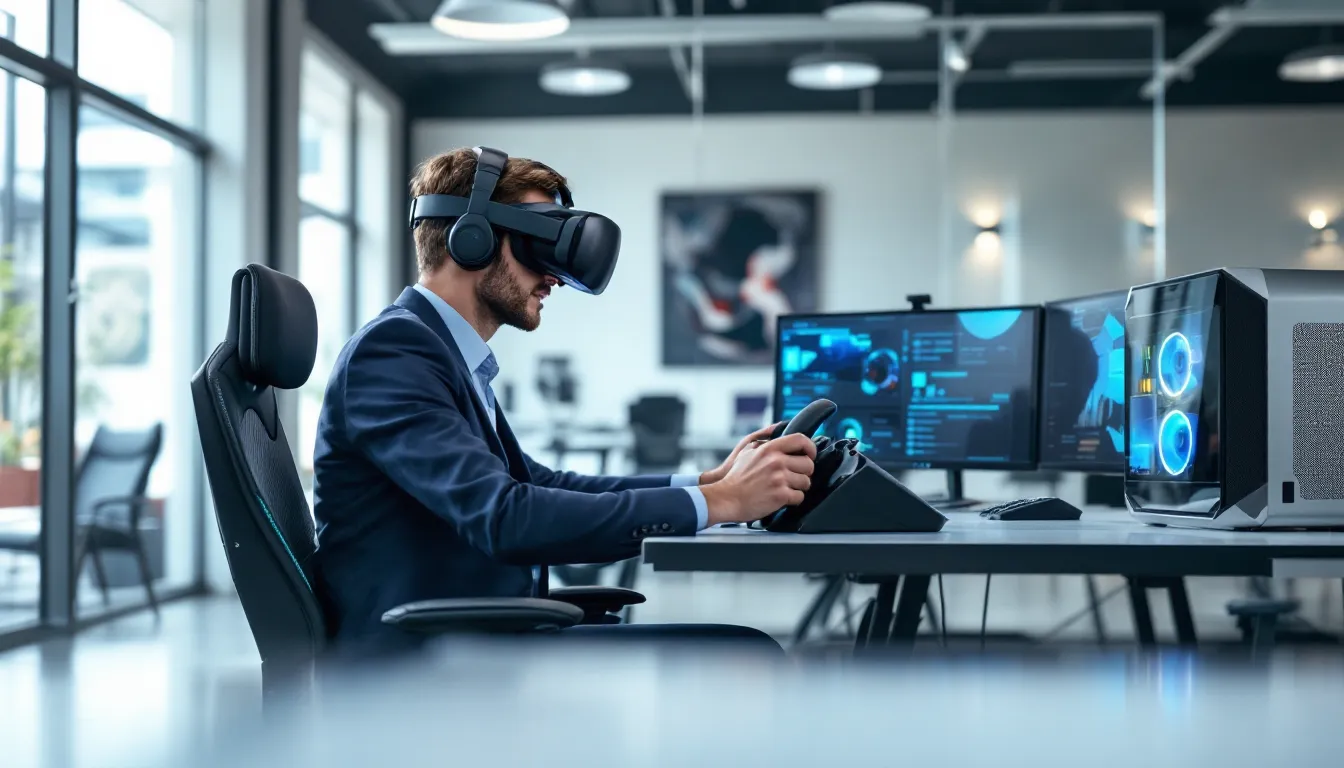
VR simulation games have evolved from novelty tech demos into genuinely transformative experiences that blur the line between virtual and reality. Whether you’re looking to pilot a fighter jet over hostile territory, race Formula 1 cars at Spa-Francorchamps, or survive in the Amazon rainforest, modern VR simulations deliver depth and immersion that flat-screen gaming simply can’t match.
The best VR simulation games aren’t just gimmicks, they’re meticulously crafted experiences that leverage room-scale tracking, haptic feedback, and spatial audio to create genuine presence. You’re not watching someone fly a plane: you’re reaching up to adjust the fuel mixture while scanning the horizon for your wingman. That distinction matters.
This guide breaks down the best VR simulation games across multiple genres, from ultra-realistic flight sims to bizarre job simulators. We’ve focused on titles with active development, strong communities, and gameplay that justifies strapping a headset to your face for hours. Let’s immerse.
Not every VR game with “simulation” in the title deserves your time. The category spans everything from hyper-realistic professional training tools to absurdist comedy experiences. Great VR simulations share specific qualities that separate them from mediocre ports or shallow experiments.
Immersion is the non-negotiable foundation. The best VR sims use 1:1 hand tracking, realistic physics, and environmental detail to create presence, that sensation where your brain temporarily accepts the virtual world as real.
Microsoft Flight Simulator VR achieves this through photogrammetry and real-world weather data. When you’re flying over your actual neighborhood at dusk and the sun hits the cockpit exactly as it would in reality, that’s immersion. Compare that to a game with clunky controls and sterile environments, and the difference is night and day.
Realism doesn’t always mean ultra-serious simulation, though. Job Simulator nails immersion through comedic physics and intuitive interactions, even though you’re throwing donuts at robot faces. The key is internal consistency, the world follows its own rules reliably.
The initial “wow” factor of VR wears off fast. Lasting VR simulations need deep systems that reward hundreds of hours of engagement.
DCS World exemplifies this with aircraft that require genuine study to operate. You’re not just pushing “take off” button, you’re running pre-flight checks, managing complex systems, and learning energy management in dogfights. That learning curve creates lasting engagement.
iRacing similarly hooks players through competitive multiplayer and progression systems. The combination of skill-based matchmaking, official racing series, and continuous content updates keeps the community active years after launch. A VR sim that delivers 10 hours of novelty then collects dust hasn’t earned its place on this list.
Flight sims are VR’s killer app. The cockpit environment translates perfectly to headsets, and the sensation of actual flight is something pancake gaming can’t replicate.
Microsoft Flight Simulator received VR support in December 2020 (Sim Update 2), and it remains the most visually stunning flight experience available. The integration with Bing Maps data means you can fly over any location on Earth with impressive accuracy.
The VR implementation supports all major headsets including Meta Quest 3, Valve Index, and HP Reverb G2. Performance demands are brutal, expect to need an RTX 4070 or better for comfortable framerates at high settings. But when you’re hand-flying a Cessna 172 through the Norwegian fjords or shooting an ILS approach into LAX in heavy weather, the visual fidelity is unmatched.
Gameplay depth comes from genuine aerodynamics, realistic avionics, and weather systems that mirror real-world conditions. The learning curve is steep if you’re serious about procedures, but casual players can jump in with simplified controls. Third-party aircraft add even more depth, with study-level recreations of airliners that simulate every system.
DCS World is the gold standard for combat flight simulation. It’s free-to-play with purchasable aircraft modules, each modeled with obsessive accuracy. We’re talking clickable cockpits where every switch, dial, and circuit breaker functions correctly.
The VR experience is exceptional because you need that spatial awareness. In a dogfight, you’re craning your neck to track a bandit through a barrel roll while managing weapons systems. The F/A-18C Hornet module alone offers hundreds of hours of learning, startup procedures, radar modes, weapons employment, carrier operations.
Multiplayer servers run persistent campaigns where coordination and tactics matter more than twitch reflexes. The community creates detailed missions and campaigns, and the modding scene is robust. DCS runs on PC via Steam or standalone client, with regular updates and new modules releasing consistently.
Be warned: this isn’t pickup-and-play gaming. You’ll spend hours in training missions before you’re competent. But that complexity is the point.
VTOL VR takes a different approach, fictional aircraft with simplified but coherent systems, built specifically for VR. It launched in 2017 and has grown through Early Access into one of the most polished VR-native flight sims.
The genius is in the design. You interact with cockpit switches and screens using hand controllers, with no mouse or keyboard needed. The aircraft are fictional, which lets the developer focus on intuitive VR interaction rather than perfect realism. You’ll still manage weapons systems, navigation, and complex missions, but the learning curve is friendlier than DCS.
Multiplayer supports co-op and PvP across various mission types. The campaign mode offers structured progression, and the Steam Workshop has thousands of user-created scenarios. At $30, it’s incredible value for VR flight sim newcomers who want depth without requiring a real-world pilot’s license.
Racing sims in VR deliver something magical: the ability to naturally apex corners by looking through the turn, judge braking points with proper depth perception, and feel genuine speed. These titles represent the pinnacle of virtual motorsport.
Assetto Corsa Competizione (ACC) is the official GT World Challenge game, focusing exclusively on GT3 and GT4 racing. The VR support is excellent, with native integration for all major headsets and performance that holds steady even in 30-car grids.
The physics engine is brutal and rewarding. Cars have weight, tire models react to temperature and pressure realistically, and setups genuinely matter. The force feedback communicates what the car is doing better than almost any sim on the market. This isn’t an arcade racer, you’ll spin expensive GT3 Porsches into walls while learning racecraft.
Weather and time-of-day transitions affect track conditions dynamically. Night racing at Spa in VR, with only your headlights cutting through rain, creates tension that flat-screen racing can’t match. The AI is competitive and clean, making single-player worthwhile when you’re not running online championships.
ACC is available on PC (Steam, Epic Games Store) and received PS5 support, though VR is PC-exclusive. The 2024 Championship Pack DLC added current season content, keeping the game fresh.
iRacing is less a game and more a competitive racing service. The subscription model ($13/month or $110/year) and content pricing (tracks and cars sold separately) creates a barrier, but the return is unmatched competitive multiplayer and laser-scanned track accuracy.
Every official race is populated with real drivers in skill-based splits. The Safety Rating and iRating systems create consequences for dirty driving, making online racing cleaner than any other sim. You’ll find active series for everything from street stocks to Formula 1, with races starting every few hours around the clock.
The VR implementation is mature and optimized. Most competitive drivers use VR for the situational awareness advantage in traffic. The tracks are laser-scanned to millimeter accuracy, when you’ve learned the bumps and curbing in VR at Watkins Glen, you’ll recognize them in real life.
It’s PC-only and demands serious hardware. An RTX 4060 Ti minimum recommended, and direct drive wheelbases are common in the community. But if you’re serious about online racing, nothing else comes close.
Polyphony Digital added full VR support to Gran Turismo 7 in February 2023, exclusively for PlayStation VR2. It’s the most accessible VR racing sim, with over 400 cars and dozens of tracks playable entirely in VR.
The implementation is comprehensive, menus, garage, showroom, and all racing modes work in VR. The headset’s eye-tracking enables foveated rendering, maintaining visual quality while hitting 90fps. The sense of scale is spectacular: the first time you sit in a vintage Ferrari 250 GTO cockpit and look around the meticulously modeled interior, the appeal is obvious.
GT7’s physics sit between arcade and hardcore sim, making it approachable for newcomers while offering depth through tuning and driving techniques. The campaign mode, GT Café, and rotating online events provide structure. The game receives regular free updates with new cars and tracks.
The downside is the PSVR2 exclusivity, you need both a PS5 and the $550 headset. But for console players, it’s the definitive VR racing experience.
Sometimes the appeal isn’t high-stakes action but the satisfaction of mastering mundane tasks with your actual hands. These VR sims range from surprisingly educational to deliberately absurd.
Cooking Simulator VR takes real cooking seriously, with accurate recipes, ingredient preparation, and cooking techniques. The VR version launched in 2020 and offers more intuitive interactions than the pancake original.
You’ll chop vegetables with realistic knife physics, sauté proteins while managing pan temperature, and plate dishes according to recipes. The career mode progressively unlocks ingredients and kitchen equipment as you complete orders. Mess up the timing and you’ll serve burnt chicken or raw pasta, customer ratings drop accordingly.
The sandbox mode lets you experiment without pressure. Want to make actual French onion soup following proper technique? The game accommodates that. Want to throw eggs at the ceiling and set the kitchen on fire? Also an option. Recent updates added new kitchens, recipes, and improved physics.
It’s available on PC via Steam and supports all major headsets. The educational value is legitimate, you’ll learn real knife techniques and recipe fundamentals while having fun.
Surgeon Simulator VR: Meet The Medic (2016) is the opposite approach to simulation, deliberately clumsy controls create comedy from medical procedures that should be precise. You’re performing surgery with the manual dexterity of someone wearing oven mitts.
The Team Fortress 2 collaboration means you’re “operating” on the Medic character while he casually chats with you. You’ll fumble with scalpels, accidentally puncture organs, and generally cause medical malpractice while trying to complete transplants. The physics-based interactions are the joke, grabbing tools is difficult, precision is nearly impossible, and chaos is the intended outcome.
It’s short and focused, more party game than long-term sim. But the VR implementation is solid, and if you’ve got friends watching through the social screen, the emergent comedy is gold. Available on PC and PSVR.
Owlchemy Labs’ Job Simulator (2016) remains one of the best introductions to VR. It’s set in a future where robots have replaced all workers, and you’re experiencing “the job museum” to learn what work used to be like.
You’ll play as an office worker, gourmet chef, convenience store clerk, and auto mechanic across four job scenarios. The genius is in the interaction design, everything responds logically to your touch. Throw food in the blender, blend it, and you can drink it. Stack office supplies into precarious towers. Photocopy your face.
The humor comes from the absurdist robot characters and the freedom to ignore objectives in favor of creative chaos. The physics are forgiving enough to feel reliable but loose enough to enable experimentation. It’s one of the few VR games grandparents and kids can immediately grasp.
Available on every major VR platform (PC VR, PSVR, Quest), it’s a safe recommendation for newcomers. The sequel, Vacation Simulator, follows the same formula in different settings.
Space sims deliver isolation, wonder, and complexity in equal measure. VR adds the scale and immersion that makes you feel genuinely small in the cosmos.
Elite Dangerous launched VR support in 2015 and remains one of the deepest space sims available. The 1:1 scale Milky Way galaxy contains 400 billion star systems, most procedurally generated but based on astronomical data where available.
You’re a ship commander in the year 3308, free to pursue trading, mining, combat, exploration, or any combination. The VR cockpit experience is exceptional, you’ll look over your shoulder to check your ship’s integrity during a firefight, glance down at navigation panels, and crane your neck to track enemy fighters in a furball.
The flight model is Newtonian with flight-assist options, meaning momentum and vector matter. Combat requires managing power distribution, heat levels, and positioning while actually piloting in three-dimensional space. Exploration involves long-distance jumps, scanning systems, and discovering planets no other player has seen.
Multiplayer exists in a shared galaxy where player actions affect the background simulation. Community goals, Powerplay faction warfare, and player-run groups create emergent gameplay. The 2024 Update 18 overhaul improved performance and added graphical improvements specifically benefiting VR users.
Available on PC via Steam and Epic Games Store. Console versions exist but don’t support VR. Expect to invest serious time learning systems, the learning curve is steep.
Hello Games added full VR support to No Man’s Sky in 2019’s Beyond update, and it’s been refined continuously since. The entire game is playable in VR across procedurally generated galaxies with quintillions of planets.
The appeal is exploration and base-building in alien environments. You’ll land on toxic worlds with bizarre flora, discover ancient ruins, dogfight pirates in asteroid fields, and construct bases on paradise planets. The survival and crafting loops provide structure, while the expedition events offer time-limited narrative experiences.
VR interactions let you physically grab your multitool to mine resources, gesture to interface with your ship, and explore crashed freighters with proper scale. Flying between planets in VR emphasizes the distances involved in ways that pancake mode doesn’t capture. The developers have achieved recognition for transforming the game from its controversial 2016 launch into one of the most content-rich space sims available.
Cross-play exists between VR and non-VR players. Available on PC via Steam and GOG, PSVR, and PSVR2. The free updates continue regularly, the 2025 Worlds Part II update overhauled planet generation and water systems.
EA Motive’s Star Wars: Squadrons (2020) is a focused starfighter combat sim set after Return of the Jedi. It’s fully playable in VR on PC and PSVR, and the cockpit experience is exactly what Star Wars fans have wanted for decades.
You’ll fly iconic ships, X-wings, TIE Fighters, A-wings, TIE Bombers, with detailed cockpits and distinct flight characteristics. The single-player campaign alternates between New Republic and Imperial perspectives, with a story that’s surprisingly well-written for a multiplayer-focused game.
The multiplayer dogfight and fleet battle modes support 5v5 competitive play with power management, shield balancing, and teamwork determining outcomes. The skill ceiling is high, top players are managing power systems, drift-turning, and using advanced tactics well beyond point-and-shoot.
The VR implementation is excellent, particularly in PSVR where performance is locked at 90fps. The headset tracking to look around the cockpit, check your six, and acquire targets creates tactical advantages. There’s no VR-exclusive content, but the immersion transforms the experience.
Support ended in 2021, so no new content is coming, but the multiplayer community remains active. At $40 (frequently on sale), it’s worth it for the campaign alone if you’re a Star Wars fan with VR hardware.
Survival sims in VR add physical stakes to resource management. You’re not clicking on trees, you’re swinging an axe with your actual arms. That physical interaction changes how these games feel.
Green Hell VR (2022) is a VR-native remake of the 2019 survival game, rebuilt specifically for VR rather than ported. You’re stranded in the Amazon rainforest with nothing but a radio and a notebook, and the jungle wants you dead.
Survival mechanics are detailed: wound care, sanity management, nutrition balance, and water safety all matter. You’ll physically craft tools by combining items, check your real watch to track time, and inspect your body for leeches and infections. The immersion when you’re huddled in a shelter during a rainstorm, low on food and hearing predators outside, is genuinely tense.
The story mode follows your search for your missing wife through increasingly dangerous jungle environments. Co-op supports up to four players, transforming the experience into a shared survival challenge. The VR interactions are well-tuned, starting fires with a bow drill, building shelters, and treating wounds all use intuitive hand motions.
Available on PC VR (Steam) and Meta Quest 2/3 as a native standalone version. The Quest port is impressive for mobile hardware, maintaining most of the visual fidelity and all the mechanics.
Farming Simulator 22 added VR support in 2023, letting players experience industrial agriculture from the cab of realistic farm equipment. It’s exactly what it sounds like, you’ll plant, cultivate, and harvest crops using accurately modeled tractors, combines, and implements.
The appeal is the meditative loop of farm management. You’ll plow fields, monitor crop growth, manage livestock, and expand your operation across three open-world maps. The VR perspective makes operating complex machinery more intuitive, you can see attachment points when coupling implements, judge row spacing while planting, and navigate tight spaces in barnyard maneuvers.
The simulation depth is serious. Equipment behaves according to real physics, crop yields depend on soil quality and fertilization, and economics require planning harvest timing and commodity pricing. The mod community is enormous, adding hundreds of real-world equipment brands and custom maps.
PC-only via Steam, with VR support for all major headsets. It’s niche, but if you find satisfaction in optimization and logistics, Farming Sim in VR delivers hundreds of hours of gameplay. The 2025 season DLC keeps the equipment roster current.
Endnight Games added VR support to The Forest in 2016, and it remains one of the most intense survival horror experiences in VR. You’re a plane crash survivor on an island inhabited by cannibalistic mutants, trying to find your missing son.
The VR implementation is comprehensive, you can play the entire story campaign and access all mechanics in VR. Building shelters uses the same construction system but with hand tracking for placement. Combat is visceral and terrifying when you’re clubbing attackers with a makeshift axe while they scream and rush you in the dark.
The survival systems include hunger, thirst, stamina, and temperature. You’ll hunt animals, build bases with extensive construction options, explore cave systems, and gradually uncover the island’s dark secrets. Co-op supports up to eight players in VR or pancake mode together.
The horror elements hit harder in VR. When cannibals patrol near your shelter at night, and you’re watching through cracks in the walls, the tension is oppressive. Available on PC via Steam for all major headsets. The sequel, Sons of the Forest, is in Early Access but hasn’t added VR support yet, hopefully soon.
Some VR sims occupy unique niches, experiences you can’t categorize neatly but deliver compelling simulation gameplay anyway.
Both Euro Truck Simulator 2 and American Truck Simulator from SCS Software support VR, and they’re shockingly relaxing. You’ll haul cargo across meticulously recreated highways in Europe or North America, managing fuel, rest stops, and delivery schedules.
The VR perspective transforms what could be boring into genuinely immersive long-haul trucking. You’ll check your mirrors before lane changes, navigate truck stops, and watch the landscape scroll by from the cab. The scale is the selling point, you feel the length and weight of your rig in ways pancake mode doesn’t communicate.
Both games receive continuous updates expanding the map coverage and adding licensed trucks. The mod community adds traffic improvements, graphics enhancements, and custom cargo. It’s perfect for podcast listening or decompressing after intense gaming sessions.
PC-only via Steam. Performance is excellent even on modest hardware. American Truck Simulator’s 2025 Texas DLC added massive new territory, while ETS2 continues expanding Eastern Europe coverage.
Waltz of the Wizard: Extended Edition is part magic sandbox, part puzzle game, part simulation of being a wizard in a tower full of experimental spells. It’s free on most VR platforms, which is wild given the production value.
You’ll mix potions using alchemical ingredients, cast spells with hand gestures, solve environmental puzzles, and discover secrets throughout a detailed wizard’s workshop. The interaction design is exceptional, everything responds to your touch logically, and experimentation is encouraged and rewarded. Many players view it as one of those essential VR experiences that showcase what the medium can uniquely accomplish.
The Extended Edition added hours of additional content, including a full narrative experience and new environments beyond the original tower. The physics-based magic system creates emergent moments, combining spells in creative ways produces unexpected results.
Available free on Steam, Meta Quest, and PSVR. It’s one of those titles you show non-VR gamers to demonstrate the technology’s potential.
Kayak VR: Mirage (2022) simulates kayaking through stunningly recreated natural environments using photogrammetry and high-resolution textures. You’ll paddle through Norwegian fjords, Antarctic waters, and Costa Rican coastlines with surprising realism.
The physical paddling motion provides a genuine workout, your shoulders will feel it after an hour. The water physics react to your paddle strokes convincingly, and the environments are gorgeous enough to justify just drifting and sightseeing. Free exploration mode lets you set your own pace, while races and checkpoint challenges add structure.
The meditation mode removes objectives entirely, adding guided breathing exercises and ambient soundscapes. It’s one of the few VR titles genuinely useful for relaxation and exercise simultaneously.
Available on PC VR (Steam) and Meta Quest 2/3. The developers continue adding new environments, the 2025 update added the Great Barrier Reef location with underwater viewing options.
Running demanding VR sims requires careful hardware consideration. Here’s what actually matters based on current 2026 standards.
Headset selection depends on your platform, budget, and simulation focus:
Meta Quest 3 ($500, 128GB) is the best all-around value. It runs standalone VR without a PC but also supports PC VR via Air Link or cable. The pancake lenses and increased resolution over Quest 2 make a noticeable difference in sim racing and flight sims where you’re reading instruments. It’s the headset we recommend for most people entering VR.
PlayStation VR2 ($550, requires PS5) is the choice if you’re console-focused and want Gran Turismo 7 VR. The OLED panels, eye tracking, and haptic feedback in the headset itself create premium experiences. The limitation is PlayStation exclusivity, no PC compatibility.
Valve Index ($999 for full kit) is aging (2019 release) but remains popular for the best-in-class controllers and high refresh rate (144Hz). The wider field of view and excellent audio matter in sims where peripheral vision and spatial audio enhance immersion. But, newer headsets have better displays.
HP Reverb G2 ($450-$600, discontinued but available used) offers the highest resolution of the previous generation, making it popular with sim racers who prioritize reading distant track markers. The controllers are mediocre, but sims mostly use wheel/HOTAS anyway.
Bigscreen Beyond ($999, requires base stations) is the current enthusiast choice, custom-fit, incredibly lightweight, and high resolution. It’s for serious sim racers who want to run multi-hour sessions without headset fatigue. You’ll need existing SteamVR tracking infrastructure.
For simulation-focused VR, prioritize display resolution and comfort over controller quality. You’ll likely use specialized peripherals for input anyway.
Hand controllers work fine for Job Simulator or Waltz of the Wizard. For serious racing or flight sims, dedicated peripherals transform the experience:
Sim Racing Wheels: Entry-level options start around $300 (Logitech G29/G920), but mid-tier direct drive wheelbases ($500-$1000 like Moza R5 or Fanatec CSL DD) provide force feedback that communicates car behavior properly. Add a load cell brake pedal ($150-$300) for consistent braking points. High-end setups with motion rigs exist, but diminishing returns hit hard above $2000 total investment.
Flight Sim HOTAS: Thrustmaster T.16000M FCS HOTAS (~$150) is the entry-level king, adequate stick precision and enough buttons for most aircraft. The VKB Gladiator NXT ($200-$250) offers significantly better build quality and precision. True enthusiasts run dual VKB or Virpil sticks ($400+) for space sims or helicopter controls.
Rudder Pedals: Essential for any serious flight sim work. Thrustmaster TFRP ($100) handles basics, while VKB T-Rudders ($150-$180) or MFG Crosswind ($450) provide the precision and build quality for long-term use.
Don’t cheap out on mounting solutions. A wobbly wheel or HOTAS mounted to a desk with clamps kills immersion faster than low-res textures. Dedicated sim rigs like the Next Level Racing GT Lite (~$300) or GT Track ($500) provide stable platforms that improve consistency and comfort during long sessions.
VR simulation games have matured from experimental tech demos into legitimate platforms for long-term engagement. Whether you’re chasing lap times in GT7 VR, learning DCS aircraft systems, or just paddling through Antarctic waters in Kayak VR, modern VR sims deliver experiences flat screens can’t replicate.
The barrier to entry has dropped significantly. Quest 3 provides capable standalone VR for $500, and many of these titles run well on mid-tier gaming PCs. The question isn’t whether VR simulation is worth trying, it’s which niche grabs your interest first.
Start with something in your existing wheelhouse. If you love racing games, grab Assetto Corsa Competizione and a decent wheel. Space sim fan? Elite Dangerous in VR will consume hundreds of hours. Even casual players find value in approachable titles like Job Simulator or No Man’s Sky VR.
The simulation genre is where VR proves its value beyond gimmickry. These are the experiences that justify the hardware investment and keep players coming back long after the novelty fades.