Phone:
(701)814-6992
Physical address:
6296 Donnelly Plaza
Ratkeville, Bahamas.

Phone:
(701)814-6992
Physical address:
6296 Donnelly Plaza
Ratkeville, Bahamas.
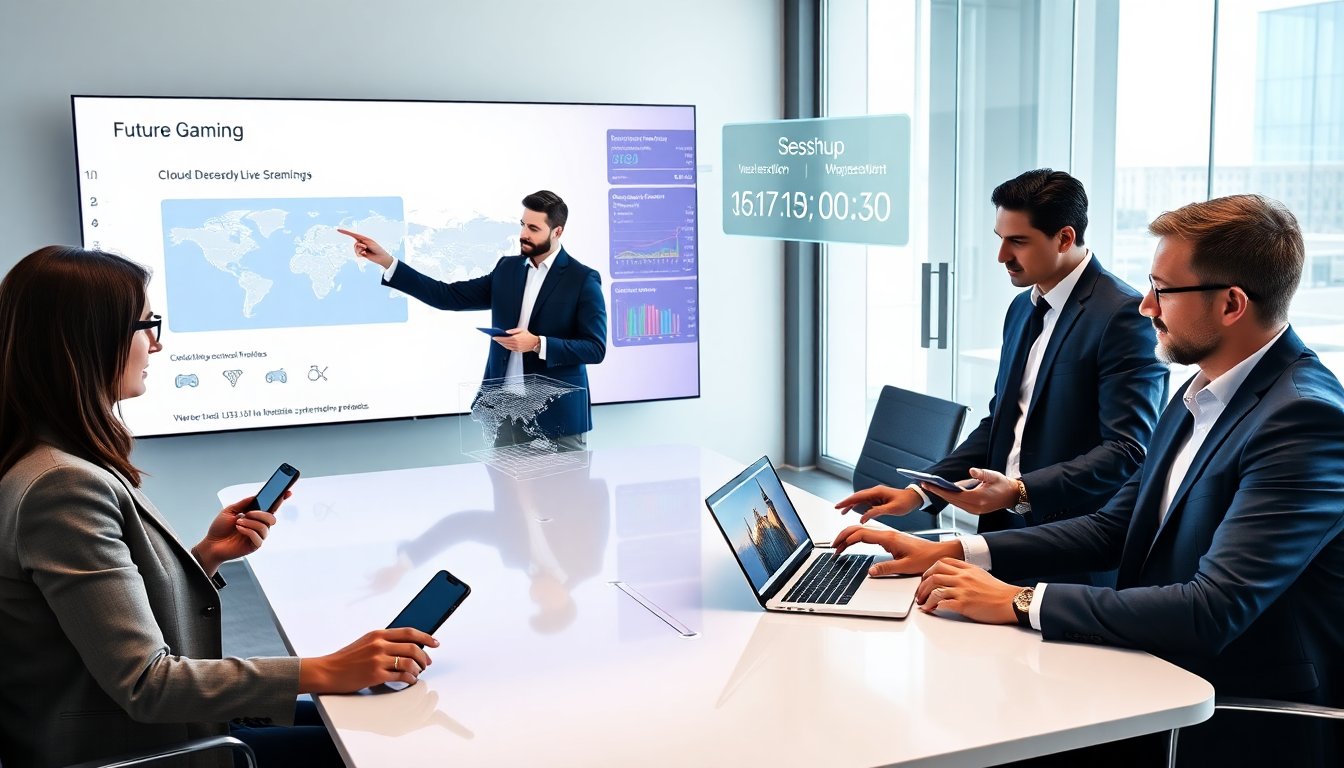
The future of mobile gaming will shift how people play and pay. The future of mobile gaming will move from single-player apps to shared, live, and cloud-based experiences. The future of mobile gaming will change player habits, platform roles, and revenue models. This article lists the main trends, core technologies, and practical steps for players, developers, and publishers.
Mobile players will spend more time on social and streaming platforms. They will watch playthroughs, chat about games, and then join the same session. The future of mobile gaming will favor short session loops and persistent worlds. Casual sessions will sit alongside longer cooperative runs. Players will prefer games that save progress across devices.
Platforms will shift roles. App stores will keep hosting games. Cloud services will host high-fidelity titles. Social apps will host lightweight experiences and discovery feeds. Brands will sponsor events inside free games. The future of mobile gaming will blur the line between apps and services.
Player behavior will change. Younger players will expect instant play and social features. Older players will adopt mobile versions of PC and console hits. Micro-communities will form inside games and on third-party platforms. The future of mobile gaming will create more tournament play and creator-led events.
New genres will rise. Live service mini-games will mix with casual competitive formats. Shared world shooters and short-form RPGs will appear on phones. Augmented reality titles will return with better design and lasting content. The future of mobile gaming will include hybrid genres that borrow mechanics from PC and console games.
Cloud streaming will remove hardware limits. Players will access high-end graphics on modest phones. Developers will stream large worlds and advanced physics. The future of mobile gaming will rely on stable networks and efficient codecs.
5G and edge compute will lower latency. They will enable real-time multiplayer and richer AR. They will also let developers run parts of game logic on nearby servers. The future of mobile gaming will so include more synchronous play and larger player counts.
AI will automate content creation. It will generate levels, NPC dialogue, and personalized challenges. AI will also adapt difficulty and advise players. The future of mobile gaming will use AI to cut production time and to scale live content updates.
Payments will shift to subscription and hybrid models. Players will still buy items, but more will subscribe for access and perks. Advertising will become more interactive and less intrusive. The future of mobile gaming will blend subscriptions, ad revenue, and microtransactions to create steady income for developers.
Tools will simplify cross-play. Engines and middleware will let developers target phone, cloud, and web. These tools will reduce build time and increase reach. The future of mobile gaming will favor studios that use shared tech stacks and modular content delivery.
Players should diversify where they play. They should try cloud demos, social game drops, and AR experiments. Players should follow creators who test new formats. The future of mobile gaming will reward early adopters who learn new control schemes.
Developers should design for live engagement and short loops. They should support cross-save and cross-play. They should build analytics to track real-time retention and feature use. The future of mobile gaming will favor teams that release fast updates and test monetization in small cohorts.
Teams should prioritize low-latency first. They should profile network paths and fallback logic. They should optimize assets for progressive download and adaptive streaming. The future of mobile gaming will penalize heavy installs and long waits.
Publishers should move budgets to creator programs and events. They should fund sandbox tests with micro-audiences. They should offer flexible pricing and bundled subscriptions. The future of mobile gaming will reward publishers who fund creator economies and community incentives.
All stakeholders should invest in clear metrics. They should track ARPU, DAU, session length, and community growth. They should run quick experiments and retire losing features fast. The future of mobile gaming will belong to teams that treat launch as the start of product work and not as the final step.