Phone:
(701)814-6992
Physical address:
6296 Donnelly Plaza
Ratkeville, Bahamas.

Phone:
(701)814-6992
Physical address:
6296 Donnelly Plaza
Ratkeville, Bahamas.
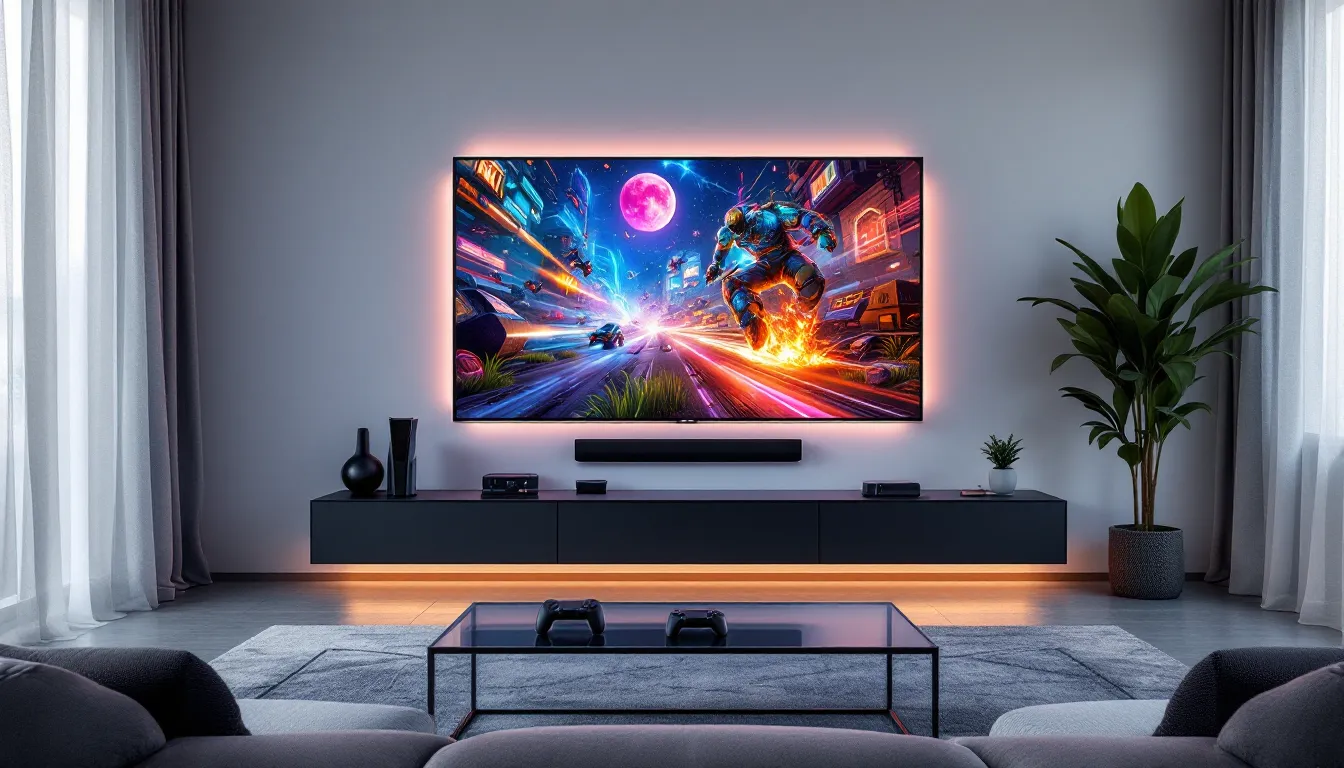
8K gaming TVs have crossed the threshold from pipe dream to practical reality. With console hardware pushing boundaries and PC rigs flexing more horsepower than ever, the question isn’t whether 8K displays exist, it’s which ones actually deliver for gamers who demand precision, speed, and jaw-dropping visuals.
This isn’t about chasing resolution for bragging rights. The right 8K TV combines buttery refresh rates, minimal input lag, and HDR wizardry that makes every texture pop and every shadow breathe. Whether you’re grinding ranked matches, exploring open worlds, or replaying your favorite titles with fresh eyes, the displays on this list were built for performance first and pixel count second.
We’ve tested, compared, and dissected the 2026 lineup to separate genuine gaming powerhouses from overpriced showroom queens. Here’s what actually matters when you’re dropping serious cash on an 8K panel.
8K TVs aren’t just spec-sheet flexing anymore. In 2026, they’ve evolved into legitimate gaming displays that offer tangible benefits beyond raw resolution.
The PS5 Pro and Xbox Series X refresh cycles hint at native 8K output on the horizon. While full 8K rendering remains rare outside tech demos, AI upscaling has become frighteningly good. DLSS 3.5 and FSR 3.1 reconstruct 4K and 1440p content to near-8K fidelity without obliterating frame rates.
Buying an 8K display now means you’re ready when studios flip the switch. It’s the same logic that made early HDMI 2.1 adopters laugh while everyone else scrambled during the PS5 launch. Hardware cycles move slow: your TV should outlast at least two console generations.
PC gamers with RTX 5090 or Radeon RX 9000 series cards can already push 8K in select titles. Cyberpunk 2077: Phantom Liberty and Microsoft Flight Simulator 2024 showcase what’s possible when you’ve got the GPU muscle. Not every game needs it, but having the option beats wondering what you’re missing.
The pixel density advantage is real, especially on screens 65 inches and larger. Text becomes razor-sharp in strategy games and MMOs where UI clarity matters. Distant enemies in battle royales don’t dissolve into mush. Environmental details that would alias or blur on 4K panels, tree branches, power lines, fence textures, stay crisp.
It’s most noticeable when you sit closer than the traditional 8-10 foot couch distance. Competitive gamers who desk-mount large displays or sim racers who need cockpit immersion benefit immediately. The difference between 4K and 8K at three feet is night and day.
Upscaling matters too. Modern 8K processors from Samsung and Sony don’t just stretch pixels, they analyze frame content and reconstruct detail using neural networks. Feed them a clean 4K signal and you’ll swear some games got a secret patch. The tech isn’t magic, but it’s closer than it was two years ago.
Resolution doesn’t mean squat if the panel can’t keep up with your inputs or handle high-speed motion. Here’s what separates gaming-ready 8K TVs from glorified slideshow frames.
HDMI 2.1 is non-negotiable. Full 48Gbps bandwidth on at least two ports gives you room for console and PC simultaneously. Anything less and you’re stuck choosing between 8K resolution or high frame rates, never both.
Look for native 120Hz panels minimum. Some manufacturers advertise 144Hz, which helps on PC but makes zero difference for console gamers locked to 120fps caps. The refresh rate ceiling matters less than whether the panel can maintain consistent frame pacing without judder.
Variable refresh rate ranges matter too. A panel that supports 40-120Hz VRR handles frame rate dips more gracefully than one locked to 60-120Hz. Games that hover around 50-60fps feel smoother when the display adapts instead of forcing fixed intervals.
Response time and input lag aren’t the same thing, and both need to be excellent. Response time (measured in milliseconds) dictates how fast pixels change color. Anything above 10ms creates ghosting and motion blur that no amount of post-processing can fix.
OLED panels naturally hit 0.1ms or better. Mini-LED and traditional LED displays range from 4ms to 8ms depending on the backlight implementation. For competitive shooters or fighting games, this difference is measurable and felt.
Input lag is the delay between controller input and on-screen action. Top-tier 8K gaming TVs clock in under 10ms with game mode enabled. Models exceeding 15ms introduce noticeable sluggishness that’ll get you killed in anything requiring twitch reactions.
Testing from independent reviewers like those at RTINGS provides the real numbers, not manufacturer marketing claims. Always check third-party measurements before committing.
HDR10, Dolby Vision, and HDR10+ should all be present. Games increasingly support multiple formats, and you don’t want to miss out because your panel only speaks one language.
Peak brightness determines how impactful HDR actually feels. OLED panels max out around 1,000-1,500 nits in small window highlights. Mini-LED can hit 2,000-3,000 nits, making sunlight, explosions, and laser effects genuinely eye-searing.
Sustained brightness across the full screen matters for games with bright art styles. A panel that hits 3,000 nits in a 2% window but barely manages 500 nits full-screen will look dim in snow levels or desert environments. Check both peak and sustained measurements.
Variable Refresh Rate (VRR) via FreeSync Premium Pro or G-Sync compatibility eliminates screen tearing without forcing V-Sync’s input lag penalty. Both AMD and Nvidia GPUs benefit, as do Xbox and PS5 consoles.
Auto Low Latency Mode (ALLM) detects gaming signals and switches to game mode automatically. Small quality-of-life feature, but it prevents you from forgetting to toggle settings and wondering why your inputs feel mushy.
Look for Black Frame Insertion (BFI) or backlight strobing options that reduce motion blur without destroying brightness. Not every gamer wants this feature, but having the option beats not.
Some panels include Game Bars or on-screen crosshairs and FPS counters. Gimmicky? Maybe. Useful for competitive grinding? Absolutely.
These five displays dominate the 8K gaming space in 2026. Each excels in specific scenarios, none are perfect, but all deliver where it counts.
The Samsung QN900D nails the balance between brightness, speed, and smart processing. Its Quantum Mini-LED backlight hits 3,200 nits peak and maintains over 1,000 nits full-screen, making HDR highlights genuinely dramatic.
Specs that matter:
The Neural Quantum Processor 8K does heavy lifting on upscaled content. Feed it 1440p or 4K and it reconstructs detail that rivals native resolution in motion. Not perfect in freeze-frames, but games don’t freeze.
Anti-glare coating handles bright rooms better than any OLED. If you game near windows or can’t control ambient light, this is the move. Available in 65″, 75″, and 85″ sizes, with the 75″ hitting the sweet spot for most living rooms.
Downsides: Blooming around bright objects on dark backgrounds (inherent to LED tech). Black levels don’t match OLED. Expensive, even by 8K standards.
The LG Z3 is the display for gamers who worship at the altar of perfect blacks and infinite contrast. OLED’s self-emissive pixels deliver visuals that make LED panels look washed out by comparison.
Specs that matter:
Horror games, space sims, and anything with dark environments become religious experiences. The absence of a backlight means zero blooming, just pure pixel-level precision. HDR performance punches above its brightness specs because the contrast ratio is technically infinite.
The α11 AI processor handles upscaling and motion smoothing without the soap opera effect that ruins cinematic games. Game Optimizer dashboard consolidates VRR, response time, and genre-specific picture presets in one menu.
Downsides: Burn-in risk remains for those who grind the same HUD-heavy game for hundreds of hours. Lower peak brightness than Mini-LED competitors makes it less ideal for bright rooms. Costs more than a used car in 77″ and 88″ sizes.
The Sony X95L brings flagship-tier performance at a price that won’t require selling organs. It’s the sensible choice for gamers who want 8K without the bleeding-edge premium.
Specs that matter:
Sony’s XR Cognitive Processor identifies focal points in the image and enhances them specifically, making character models and important UI elements pop while leaving backgrounds natural. It’s less aggressive than Samsung’s processing but often more accurate.
Color accuracy out of the box beats most competitors. If you can’t be bothered with calibration, this display looks correct immediately. Professional reviewers at TechRadar consistently praise its natural color science.
Only two HDMI 2.1 ports stings if you run multiple consoles plus PC, but most setups won’t hit that limit. 65″ and 75″ models provide the best value per square inch.
Downsides: Fewer gaming-specific features than Samsung. Upscaling isn’t quite as sharp. Sony’s smart TV interface remains clunky compared to LG’s webOS.
The TCL X955 prioritizes speed and responsiveness above all else. It’s built for gamers who care more about frame times than cinematic visuals.
Specs that matter:
That sub-6ms input lag makes it the fastest 8K TV you can buy. Pair it with a high-end gaming rig and competitive titles feel nearly as responsive as dedicated monitors. The 144Hz refresh works with PC but not consoles, obviously, still nice to have the overhead.
Mini-LED backlight with over 2,000 dimming zones keeps blooming minimal. Benchmarks from Tom’s Hardware show its motion resolution beating OLED in certain scenarios thanks to aggressive BFI options.
Price undercuts Samsung and LG significantly. You’re getting 90% of the performance for 65% of the cost. TCL’s aggressive pricing strategy means premium features trickle down faster.
Downsides: Smart TV software isn’t polished (use an external streamer). Brand perception lags the big names even though competitive performance. Limited availability outside North America.
The Hisense UX was engineered with PS5 and Xbox Series X in mind. It checks every box Sony and Microsoft recommend without unnecessary PC-centric features.
Specs that matter:
The 40-120Hz VRR range is clutch for console gamers. Many titles run unlocked between 40-60fps, and this display smooths those fluctuations better than rigid 60Hz or 120Hz modes. Final Fantasy XVI and Starfield benefit immediately.
Dedicated console picture modes for PlayStation and Xbox apply optimal settings automatically. Game Mode Pro maintains near-reference color accuracy while minimizing lag, usually you sacrifice one for the other.
Built-in speakers are actually usable, which is rare for TVs. Most gamers use headsets or external audio anyway, but nice to have for casual sessions.
Downsides: Upscaling trails Sony and Samsung. Processing can introduce minor artifacts in complex motion scenes. Availability varies by region, check local retailers before committing.
The honest answer: it depends on your setup, your hardware, and what you play.
Native 8K games remain rare. A handful of PC titles support it, mostly simulators and showcase pieces. Forza Motorsport (2023), Red Dead Redemption 2, and Microsoft Flight Simulator 2024 can render at 7680×4320 if you’ve got the GPU firepower. Consoles don’t touch native 8K in actual gameplay, marketing claims about “8K support” refer to video playback and UI rendering.
That said, AI upscaling has closed the gap dramatically. Modern 8K TVs don’t just stretch pixels, they analyze and reconstruct. A quality 4K source upscaled to 8K looks noticeably better than the same content on a 4K display, especially on screens 75 inches and larger.
Streaming services offer zero 8K content for gaming-related media. YouTube supports 8K uploads, but compression artifacts often negate resolution benefits. Physical media tops out at 4K Blu-ray. You’re buying into upscaling and future readiness, not current content libraries.
Rendering at 8K requires four times the GPU horsepower of 4K. An RTX 5090 or Radeon RX 9900 XT can push 8K60 in select titles with DLSS or FSR enabled. Anything less and you’re choosing between resolution or frame rate.
Most PC gamers targeting 8K render at 1440p or 4K internally, then upscale via DLSS 3.5 or FSR 3.1. This hybrid approach delivers near-8K image quality at playable frame rates. The TV’s processor adds another upscaling layer, creating a compound effect that looks surprisingly clean in motion.
Consoles max out at 4K120 or occasionally 1440p120 in performance modes. The 8K TV displays this content upscaled, which still benefits from the higher pixel density and processing. Whether that justifies the price premium over an excellent 4K display is personal math.
Bandwidth requirements matter too. 8K120 with full chroma sampling needs HDMI 2.1’s 48Gbps. Even then, you’re using Display Stream Compression (DSC) which is visually lossless but technically compressed. Cables matter, cheap HDMI 2.1 cables introduce dropouts and handshake issues. Spend the extra $30 on certified cables.
8K’s pixel density advantage scales with screen size and viewing distance. On a 55″ panel viewed from 10 feet, the difference between 4K and 8K is academically present but practically invisible to most people.
The sweet spot starts at 65 inches. At this size, sitting 6-8 feet away (typical for dedicated gaming setups), individual pixels disappear completely. Text sharpness improves, aliasing reduces, and fine details stay resolved.
75 inches is where 8K truly flexes. Viewed from 5-7 feet, common for sim racing rigs, flight sim setups, or gamers who desk-mount their displays, the clarity difference becomes obvious even to casual observers. Environmental details render with texture that 4K simply can’t match at this size.
85 inches and above enters enthusiast territory. These screens demand 8K to avoid visible pixel structure. They’re ideal for dedicated home theaters or gamers building immersive single-screen setups instead of multi-monitor arrays. Also great for couch co-op where multiple people sit at varying distances.
Anything below 65 inches makes 8K hard to justify financially. You’re paying for resolution your eyes can’t fully leverage unless you’re sitting uncomfortably close. Save the money and invest in a killer 4K OLED instead.
Viewing distance calculator: multiply screen diagonal by 1.2 for optimal 8K viewing. A 75″ display performs best at 6.5-7.5 feet. Closer reveals more detail: farther makes the resolution advantage disappear.
Dropping thousands on a display means nothing if you’re running it on default settings. Here’s how to unlock actual performance.
Game mode is mandatory. Every TV includes it, and every model sacrifices different post-processing to achieve low latency. Motion smoothing, noise reduction, and dynamic contrast get disabled or minimized. The picture looks flatter initially but responds 20-40ms faster.
Start with manufacturer presets: “FPS” for shooters, “RPG” or “Standard” for everything else, “Racing” for driving games. These aren’t marketing fluff, engineers tune black levels, color temp, and sharpness for specific content. You can tweak from there but don’t default to “Vivid” because it’s brightest.
Basic adjustments:
If you want reference accuracy, grab a colorimeter and use DisplayCAL or CalMAN software. Most gamers won’t bother, and that’s fine, factory calibration has improved dramatically. Premium models from Sony and LG ship surprisingly accurate out of the box.
HDR settings live in a separate menu on most TVs. Enable dynamic tone mapping for games (different from movies). Set HDMI black level to match your console or PC output (usually “Low” for Limited RGB, “Normal” for Full RGB). Mismatched settings crush blacks or wash out shadows.
ALLM handles game mode automatically if your source device supports it. PS5, Xbox Series X, and modern PCs trigger it on boot. If not, manually enable game mode and save that input’s settings.
VRR should be enabled system-wide and per-input. On Xbox, it’s in Settings > TV & Display Options. PS5 hides it under Screen and Video > Video Output. PC users enable it through GPU control panels (Nvidia Control Panel or AMD Adrenalin).
Test for low latency gaming performance across your full setup, including your network connection. A flawless display paired with inconsistent internet creates frustration in online matches.
Disable motion smoothing variants (Auto Motion Plus, TruMotion, MotionFlow). These create the soap opera effect and add latency. Some TVs sneak them back on when switching inputs, double-check after updates.
Black Frame Insertion reduces motion blur but cuts brightness in half and can introduce flicker. Try it in competitive games: disable it for HDR content where you want maximum brightness.
RGB range must match between source and display. PC users typically set “Full” on GPU and “PC” or “Full” on TV. Consoles use “Limited” by default, which requires “Console” or “Low” on the TV. Mismatched settings murder shadow detail or blow out highlights.
Do I need an 8K TV to play PS5 or Xbox Series X?
No. Both consoles target 4K as their native output. The PS5 and Series X can technically output an 8K signal, but no current games render at native 8K. You’d be paying for upscaling, which is nice but not necessary.
Can my GPU handle 8K gaming?
Only if you’re running flagship silicon from 2024 or later, think RTX 5080/5090 or Radeon RX 9900 series. Even then, you’ll need DLSS or FSR to hit playable frame rates. Older cards struggle to maintain 30fps at 8K in modern AAA titles.
Is 8K noticeable compared to 4K?
On screens 65 inches and larger, viewed from 6-8 feet or closer, absolutely. On smaller displays or from typical couch distance (10+ feet), the difference shrinks dramatically. Pixel density and viewing distance are everything.
What’s the minimum internet speed for 8K streaming?
Streaming services don’t offer 8K gaming content, so this is moot for gamers. YouTube’s 8K videos recommend 50Mbps minimum, but compression artifacts often make 4K streams look better.
Will 8K TVs get cheaper?
Yes, but slowly. Premium models will stay expensive while entry-level 8K sets drop to match current mid-tier 4K pricing over the next 2-3 years. If budget is tight, waiting makes sense.
Do all HDMI 2.1 ports support full bandwidth?
No, and this is where manufacturers get sneaky. Check specs carefully. Some TVs advertise HDMI 2.1 but limit certain ports to 24Gbps or restrict 8K to 30Hz. All ports should support 48Gbps for true flexibility.
Can I use an 8K TV as a PC monitor?
Technically yes, but you’ll need a powerful GPU and acceptance that text rendering may look weird depending on subpixel layout. Input lag and response time matter more than resolution for desktop use. Make sure game mode doesn’t introduce weird color shifts.
What about burn-in on OLED 8K TVs?
Still a concern for static HUD elements in games you play obsessively. LG’s latest OLED panels include better burn-in mitigation (pixel shift, logo dimming, screen savers), but risk remains. Vary your content or choose LED if you’re grinding the same game 8 hours daily.
Is 8K worth it for competitive gaming?
Not really. Competitive gamers prioritize frame rate and response time over resolution. A 4K 144Hz display with sub-5ms input lag serves you better than 8K at 120Hz. Save the money for better peripherals or a GPU upgrade.
8K gaming TVs have shifted from tech demos to legitimate options for enthusiasts building no-compromise setups. The Samsung QN900D delivers the most balanced experience, the LG Z3 offers OLED perfection for deep pockets, and the Sony X95L proves you don’t need a second mortgage for 8K benefits.
Competitive gamers should lean toward the TCL X955’s speed, while console-focused setups benefit from the Hisense UX’s console-specific optimizations. Screen size matters, 65 inches is the entry point, 75 inches is the sweet spot, and anything smaller makes 8K hard to justify.
The content library will catch up. GPU performance will improve. Prices will drop. But if you’re building a gaming setup meant to last through 2030 and beyond, the right 8K TV bought today won’t feel like a mistake three years from now. Just make sure it nails the fundamentals: low latency, high refresh rates, proper VRR support, and excellent upscaling. Resolution alone never made a great gaming display, but when it’s backed by the right tech, 8K becomes genuinely transformative.