Phone:
(701)814-6992
Physical address:
6296 Donnelly Plaza
Ratkeville, Bahamas.

Phone:
(701)814-6992
Physical address:
6296 Donnelly Plaza
Ratkeville, Bahamas.
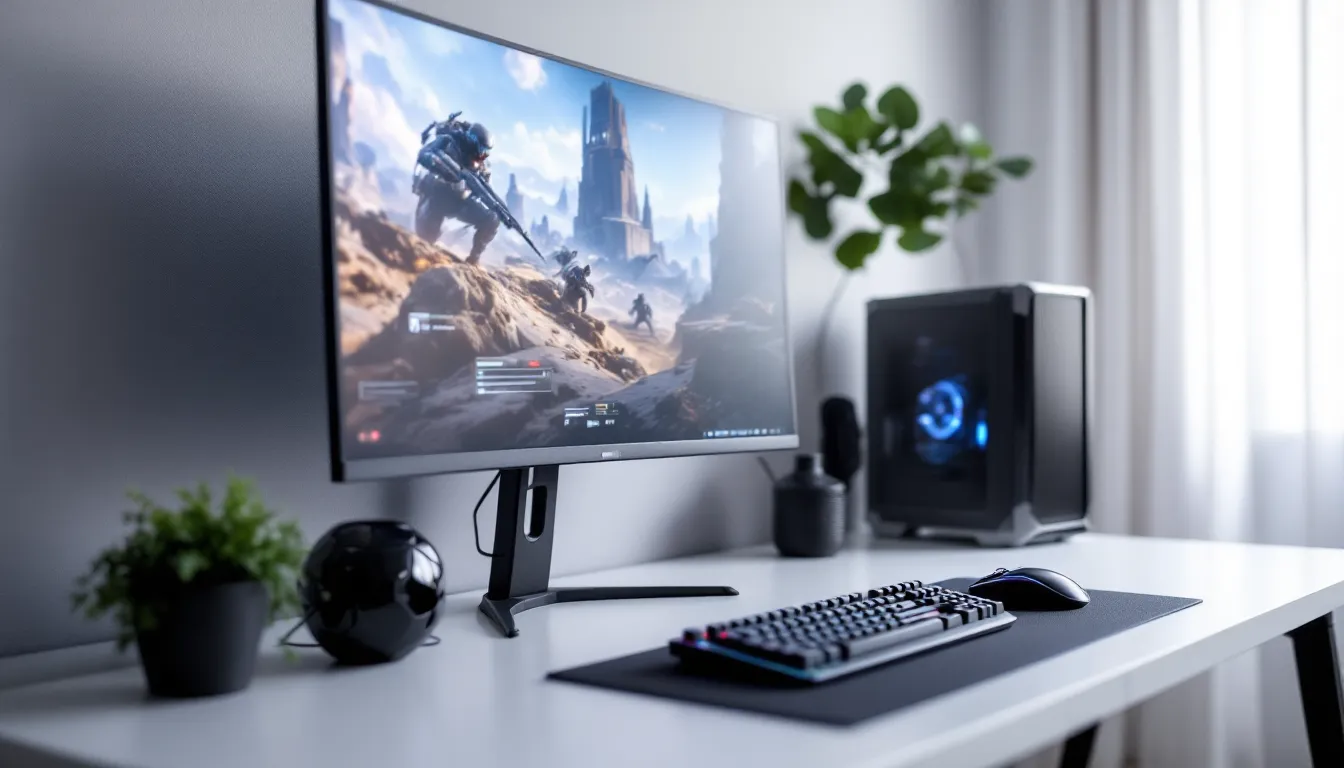
The gap between winning and losing in competitive gaming often comes down to milliseconds. While most players obsess over GPUs and peripherals, they overlook the one component that directly translates hardware performance into visual feedback: the monitor. A top-tier graphics card means nothing if the display can’t keep pace with frame output, and even casual gamers notice the difference when motion clarity, color accuracy, and responsiveness align.
In 2026, gaming monitors have evolved beyond simple refresh rate wars. OLED panels have matured, adaptive sync tech works seamlessly across ecosystems, and manufacturers finally understand that gamers need specificity, not marketing buzzwords. Whether someone’s grinding ranked matches in competitive shooters, exploring vast open worlds, or sim racing through hairpin turns, the right monitor transforms the experience from playable to unforgettable.
This guide cuts through the noise with real specs, concrete comparisons, and practical recommendations. No fluff, no padding, just what gamers need to make an well-informed choice in a market that’s more diverse and capable than ever before.
Ask any competitive player about their peripheral setup and they’ll rattle off their mouse DPI, keyboard switches, and GPU model without hesitation. But ask about monitor response time or pixel overdrive settings, and the conversation often gets vague. That disconnect costs rounds.
Consider this: a gaming PC pushing 240 FPS is wasted on a 60Hz display that can only show 60 frames per second. The GPU does its job, but the player sees outdated information, enemies appear where they were four frames ago, not where they are now. In fast-paced shooters like Valorant or Counter-Strike 2, that delay is the difference between landing a headshot and spectating.
Beyond competitive advantages, the monitor shapes every gaming experience. Poor contrast makes spotting enemies in shadows nearly impossible. Washed-out colors drain the atmosphere from story-driven games. Motion blur turns fast camera pans into a smeared mess. These aren’t minor inconveniences, they fundamentally alter how games look and feel.
Modern gaming monitors address these issues with high refresh rates, fast response times, and panel technologies that balance speed with image quality. The challenge isn’t finding capable displays: it’s matching the right specifications to individual gaming priorities. A monitor optimized for esports plays very differently than one built for immersive single-player experiences, and understanding those distinctions makes all the difference.
Refresh rate measures how many times per second a display updates its image, expressed in hertz (Hz). A 144Hz monitor refreshes 144 times per second, while a 240Hz display updates 240 times per second. Higher refresh rates deliver smoother motion, reduced input lag, and more responsive gameplay.
The practical impact scales with game genre:
The catch? The GPU must generate frames at or above the monitor’s refresh rate to see the benefit. A 240Hz monitor paired with a mid-range GPU struggling to hit 100 FPS in demanding games won’t deliver the intended experience. Match refresh rate ambitions to realistic hardware capabilities.
Response time indicates how quickly pixels change from one color to another, measured in milliseconds. Manufacturers typically advertise gray-to-gray (GtG) response times, though the measurement methodology varies between brands.
Fast response times (1ms or less) prevent ghosting, the visual artifact where previous frames leave trailing shadows behind moving objects. In competitive gaming, ghosting obscures enemy movements and makes tracking targets significantly harder. Testing from independent monitor reviewers reveals that advertised response times don’t always match real-world performance, making third-party reviews essential.
Most gaming monitors include overdrive settings that accelerate pixel transitions. These settings reduce response time but introduce a trade-off: push overdrive too aggressively and inverse ghosting (coronas around moving objects) appears. The optimal setting usually sits in the middle range, balancing speed with visual artifacts.
Resolution defines pixel count, directly impacting image sharpness and GPU workload. Higher resolutions display more detail but demand significantly more processing power:
Frame rate penalties scale dramatically with resolution. A GPU pushing 200 FPS at 1080p might drop to 140 FPS at 1440p and 80 FPS at 4K in the same game. Competitive players prioritize frame rates over sharpness: immersive gamers reverse that priority. There’s no universal right answer, only trade-offs aligned with gaming preferences.
Panel technology determines the fundamental characteristics of how a monitor displays images. Each type offers distinct advantages and compromises that shape the gaming experience.
Twisted Nematic (TN) panels dominated competitive gaming for years thanks to exceptionally fast response times (often sub-1ms) and high refresh rate capabilities at lower prices. Professional esports players still favor TN displays for their raw speed and minimal input lag.
The downsides are significant: narrow viewing angles cause color shifts when viewed off-center, washed-out colors lack vibrancy, and contrast ratios trail other panel types. TN monitors prioritize performance over image quality, a trade-off that makes sense for players who value every millisecond advantage in ranked matches but less appealing for those who appreciate visual fidelity.
In 2026, TN’s market share has shrunk as IPS technology closed the response time gap. High-end TN panels still exist for niche competitive applications, but most gamers find better value elsewhere.
In-Plane Switching (IPS) panels strike the best balance for most gamers. Modern IPS displays offer response times competitive with TN (1-2ms with overdrive), excellent color accuracy, wide viewing angles, and significantly better image quality. When properly equipped with essential gaming peripherals, an IPS monitor delivers exceptional versatility.
IPS advantages include:
The traditional IPS weakness, IPS glow, where corners appear slightly brighter when viewed in dark scenes, has improved with newer panel generations but hasn’t disappeared entirely. Contrast ratios, while better than TN, still lag behind VA panels. For the vast majority of gamers playing a mix of competitive and single-player titles, IPS represents the most versatile choice.
Vertical Alignment (VA) panels excel at contrast ratios, delivering the deepest blacks and most impressive image depth among LCD technologies. This makes VA particularly compelling for horror games, atmospheric titles, and dark environments where shadow detail matters.
VA panels offer:
The critical weakness? Response times. Even with aggressive overdrive, VA panels typically measure 3-5ms gray-to-gray, with slower black-to-gray transitions causing noticeable smearing in dark scenes during fast motion. Competitive players find this unacceptable, but gamers prioritizing immersion over competitive edge appreciate the superior contrast.
OLED (Organic Light-Emitting Diode) technology represents the current peak of display quality. Each pixel emits its own light, enabling perfect blacks (pixels simply turn off), infinite contrast ratios, near-instantaneous response times, and vibrant colors that LCD panels can’t match.
Gaming OLED monitors in 2026 address earlier concerns about burn-in with pixel-shift technology, automatic brightness limiting, and screen savers. Modern QD-OLED panels from Samsung and WOLED panels from LG deliver exceptional performance:
The drawbacks? Price remains significantly higher than LCD alternatives, and while burn-in risk has decreased, static HUD elements in games played for thousands of hours still carry some risk. Text clarity at 1440p on WOLED panels sometimes appears slightly soft due to subpixel layout, though this varies by sensitivity and sitting distance.
For gamers who can afford the premium and play a variety of titles rather than one game exclusively, OLED delivers an experience that’s hard to go back from.
Screen size and aspect ratio dramatically affect immersion, field of view, and competitive viability. The right choice depends on desk space, sitting distance, and gaming preferences.
24-inch (1080p): The competitive standard. Smaller screens let players see the entire display with minimal eye movement, critical when tracking multiple enemies. Professional esports setups almost universally use 24-inch 1080p displays at 240Hz or higher. At typical desk distances (24-30 inches), pixel density remains sharp enough that most players don’t notice resolution limitations.
27-inch (1440p): The most popular all-around size. This combination delivers excellent pixel density (109 PPI), immersive screen real estate without overwhelming peripheral vision, and manageable GPU requirements. Most gamers find 27-inch monitors ideal for mixing competitive games with single-player titles. Sitting distance matters, at arm’s length, 27 inches fills vision nicely without requiring head movement.
32-inch (1440p or 4K): Immersive gaming territory. At 32 inches, 1440p pixel density drops noticeably (92 PPI), making 4K the preferred resolution even though its GPU demands. This size suits single-player games, sim racing with cockpit setups, and players who sit slightly farther back. Competitive gamers generally avoid 32-inch displays because scanning the full screen requires more eye and head movement.
Ultrawide (21:9 and 32:9): Expanded horizontal field of view wraps games around peripheral vision, delivering exceptional immersion in supported titles. Racing sims, flight simulators, and open-world RPGs benefit dramatically from ultrawide formats. The reality check: many competitive games restrict ultrawide resolutions to prevent field-of-view advantages, rendering the extra screen space useless in ranked matches. Check game-specific support before committing to ultrawide.
Sitting distance guides optimal sizing. A simple rule: sit approximately arm’s length (24-30 inches) from 24-27 inch monitors, and 30-36 inches from 32+ inch displays. Closer viewing distances increase perceived pixel density but also reveal panel defects and pixel structures more easily.
Screen tearing, horizontal lines splitting the image when frame rates don’t sync with refresh rates, plagued gaming for decades. Adaptive sync technologies solved this by letting monitors dynamically adjust refresh rates to match GPU output.
AMD FreeSync operates as an open standard based on VESA Adaptive-Sync protocol. It works with AMD GPUs natively and, since 2019, with NVIDIA GPUs on certified displays. FreeSync monitors cost less because AMD doesn’t charge licensing fees. Performance varies, basic FreeSync offers fundamental tearing elimination, while FreeSync Premium adds low framerate compensation (LFC) and minimum 120Hz at 1080p. FreeSync Premium Pro includes HDR certification.
NVIDIA G-Sync originally required proprietary hardware modules inside monitors, driving up costs but guaranteeing consistent performance. Modern G-Sync certifications split into tiers:
In practice, the distinction matters less than it did in 2020. Most gamers with NVIDIA GPUs find G-Sync Compatible monitors (essentially good FreeSync displays) perfectly adequate. The expensive G-Sync module only makes sense for enthusiasts chasing every marginal improvement or those needing the widest possible VRR range.
One critical specification: VRR range. Adaptive sync only functions within specific frame rate windows. A monitor with 48-144Hz VRR stops working below 48 FPS, causing stuttering in demanding games when frame rates tank. LFC helps by doubling frame presentation at low rates, but native VRR ranges starting at 30Hz or lower provide smoother low-framerate experiences.
For 2026 buyers: prioritize monitors with wide VRR ranges and LFC support over badge branding. A well-implemented FreeSync monitor outperforms a poorly executed G-Sync display every time.
High Dynamic Range (HDR) expands the brightness and contrast range displays can reproduce, theoretically delivering more lifelike images with brighter highlights and deeper shadows. The reality? HDR implementation on gaming monitors varies from transformative to utterly pointless marketing checkbox.
The challenges start with certification standards. VESA DisplayHDR tiers define minimum specifications:
Genuine HDR requires peak brightness above 1000 nits and precise local dimming to control backlight zones independently. Mini-LED backlighting with hundreds or thousands of dimming zones delivers impressive HDR on LCD panels, though not quite matching OLED’s per-pixel control. According to detailed testing by hardware reviewers at Tom’s Hardware, many budget “HDR” monitors fail to provide meaningful visual improvements over SDR.
Color gamut defines the range of colors a display can reproduce. Common standards:
Modern gaming monitors typically cover 95-100% sRGB and 85-95% DCI-P3. OLED panels achieve near-perfect color gamut coverage with accuracy that makes properly mastered games look stunning. The catch: games must support wide color gamuts to benefit, and not all do.
For practical buying guidance: skip monitors with DisplayHDR 400 certification unless priced identically to non-HDR alternatives. Target DisplayHDR 600 as minimum for noticeable improvements, or consider OLED if budget permits. HDR done right transforms games like Cyberpunk 2077 or Horizon Forbidden West, but half-implemented HDR just dims the screen and crushes shadow detail.
Generic monitor recommendations miss the point, different gaming priorities demand different specifications. Matching monitor capabilities to actual gaming habits prevents buyer’s remorse.
Competitive players need one thing above all: performance. Every specification choice prioritizes responsiveness and clarity over visual fidelity.
Optimal specifications:
Features that don’t matter: HDR, wide color gamut, high resolution. Competitive gaming strips away visual flourishes in favor of raw performance. Many pros disable visual effects in-game anyway, making premium image quality irrelevant.
Example use case: A Counter-Strike 2 player grinding to Global Elite benefits dramatically from 240Hz+ refresh rates and instant response times. When holding angles, that 4ms advantage from updated visual information can mean spotting an enemy before they spot you. Publications like PC Gamer regularly test how refresh rates impact competitive performance, consistently finding measurable advantages at higher refresh rates in blind tests.
Story-driven games, open-world RPGs, and atmospheric titles benefit from image quality over raw speed. These players want to get lost in game worlds, appreciating art direction and environmental detail.
Optimal specifications:
Frame rate targets shift from 240+ FPS in competitive games to 60-120 FPS in demanding single-player titles. A 165Hz monitor with excellent color accuracy and HDR serves these players better than a 360Hz esports display.
Example use case: Playing The Witcher 4 or Elden Ring on a 32-inch 4K OLED transforms the experience. Deep blacks in dungeons, vibrant colors in fantasy landscapes, and HDR sunsets deliver visual moments that flat SDR displays simply can’t match. The visual impact justifies the premium for players who sink 100+ hours into single titles.
Simulation enthusiasts face unique requirements, extended play sessions demand ergonomic considerations, cockpit setups benefit from specific form factors, and field of view directly impacts immersion.
Optimal specifications:
Many sim racers run triple monitor setups for maximum field of view, though ultrawide single displays offer simpler mounting and better GPU efficiency. VR provides even greater immersion but causes fatigue during hour-long races.
Example use case: An iRacing enthusiast with a cockpit rig running a 49-inch super-ultrawide gains peripheral vision critical for noticing competitors alongside during door-to-door racing. The extra horizontal space replicates actual racing visibility far better than narrower displays.
Gaming monitor pricing spans from $150 budget panels to $2000+ premium OLED displays. Understanding value tiers prevents overspending on unused features or under-buying and immediately wanting to upgrade.
Budget tier ($150-$300): Entry-level gaming displays offering basic improvements over generic monitors. Expect 1080p resolution, 144Hz refresh rate, basic IPS or VA panels, and FreeSync support. These suit casual gamers or competitive players on tight budgets who prioritize frame rates over image quality. Skip monitors in this range advertising HDR, it’s meaningless at these price points.
Mid-range sweet spot ($300-$600): The best value territory. Monitors here deliver 1440p IPS panels, 165Hz-180Hz refresh rates, good color accuracy, G-Sync Compatible certification, and solid build quality. This range offers diminishing returns above it and significant quality improvements over budget options. Most gamers should target this tier, it provides excellent performance without excessive compromises or costs.
Premium tier ($600-$1000): High-refresh 1440p panels (240Hz+), 4K displays with 144Hz+ refresh, mini-LED backlighting with genuine HDR, or entry-level OLED panels. These monitors deliver noticeable improvements for enthusiasts who can articulate exactly which upgraded features they need. Avoid this tier unless specific specifications matter for gaming style, paying extra for unused capabilities makes no sense.
Enthusiast tier ($1000+): OLED displays, 4K 240Hz panels, ultra-large screens with mini-LED backlighting, or specialized displays for professional esports. At these prices, buyers know exactly what they want and why they need it. The performance leap over premium tier narrows, this is paying significantly more for the last 10% of capability.
2026 specific value picks:
Sales and market fluctuations matter. Monitor prices drop significantly during major sales events, and previous-generation models offer excellent value when new versions launch. A two-year-old flagship monitor often outperforms current mid-range options at similar prices.
Even experienced gamers make predictable mistakes when shopping for monitors. Avoiding these pitfalls saves money and disappointment.
Mistake #1: Prioritizing refresh rate without considering GPU capability. A 360Hz monitor paired with a GPU barely pushing 100 FPS in favorite games wastes money. Match refresh rate ambitions to realistic frame rate output from current hardware. Upgrading a GPU later makes sense, but buying a monitor two tiers above current capability doesn’t.
Mistake #2: Ignoring response time and overdrive performance. Advertised response times mean little without knowing the test methodology. Two monitors claiming 1ms response time can perform vastly differently in real use. Check independent reviews testing actual pixel response curves and overdrive artifact levels rather than trusting marketing specs.
Mistake #3: Buying “HDR” monitors without proper specifications. DisplayHDR 400 certification doesn’t deliver meaningful HDR experiences. Monitors need 600+ nits peak brightness and local dimming zones to make HDR worthwhile. Budget “HDR” displays often look worse than good SDR panels because they dim overall brightness to create headroom without having the backlight control to properly use it.
Mistake #4: Choosing the wrong resolution for screen size. A 32-inch 1080p monitor looks pixelated and blurry at normal viewing distances. A 24-inch 4K display wastes GPU resources on imperceptible sharpness improvements. Stick to established pairings: 24-inch for 1080p, 27-inch for 1440p, 32-inch for 4K.
Mistake #5: Overlooking input selection and ergonomics. Modern gaming setups often connect multiple devices, gaming PC, console, work laptop. Monitors with limited inputs (one HDMI, no DisplayPort) create frustrating cable-swapping. Similarly, monitors without height adjustment, tilt, and swivel lock users into uncomfortable positions during long gaming sessions.
Mistake #6: Buying ultrawide for competitive gaming. Ultrawide aspect ratios look spectacular in supported single-player games but many competitive titles either don’t support them or actively restrict them to prevent field-of-view advantages. Research specific game support before committing to ultrawide formats.
Mistake #7: Ignoring warranty and dead pixel policies. Gaming monitors experience panel lottery, some units have perfect panels, others ship with backlight bleed, dead pixels, or excessive IPS glow. Manufacturers vary wildly in return policies. Some replace monitors with a single dead pixel: others require five or more. Understanding warranty terms before purchase prevents frustration when issues appear.
Mistake #8: Skipping calibration. Even premium monitors ship with mediocre out-of-box calibration. Most users never touch settings beyond brightness. Spending ten minutes adjusting color temperature, gamma, and overdrive settings based on professional reviews dramatically improves image quality on any monitor, regardless of price tier.
Gaming monitors in 2026 offer unprecedented choice, from lightning-fast 480Hz esports displays to stunning OLED panels that make every game look like concept art. The challenge isn’t finding capable monitors: it’s identifying which specifications actually matter for individual gaming habits.
Competitive players chasing rank need speed above all else: high refresh rates, instant response times, and display sizes that let them track every corner without head movement. Immersive gamers exploring vast worlds benefit from image quality: accurate colors, deep contrast, sharp resolution, and HDR that genuinely transforms lighting.
The gap between marketing specifications and real-world performance remains wide. Advertised response times don’t tell the full story. HDR badges don’t guarantee impressive visuals. Panel type alone doesn’t determine gaming suitability. Reading independent reviews from trusted sources, understanding the trade-offs between specifications, and honestly assessing gaming priorities leads to better purchase decisions than chasing the highest numbers on spec sheets.
Match the monitor to the games being played, the GPU driving it, and the budget available. That approach delivers more gaming satisfaction than blindly buying the most expensive display or whatever topped last month’s Reddit recommendation thread. The right monitor disappears during gameplay, it just works, translating GPU output into responsive, clear, immersive visuals that let players focus on gaming instead of fighting their setup.
