Phone:
(701)814-6992
Physical address:
6296 Donnelly Plaza
Ratkeville, Bahamas.
Phone:
(701)814-6992
Physical address:
6296 Donnelly Plaza
Ratkeville, Bahamas.
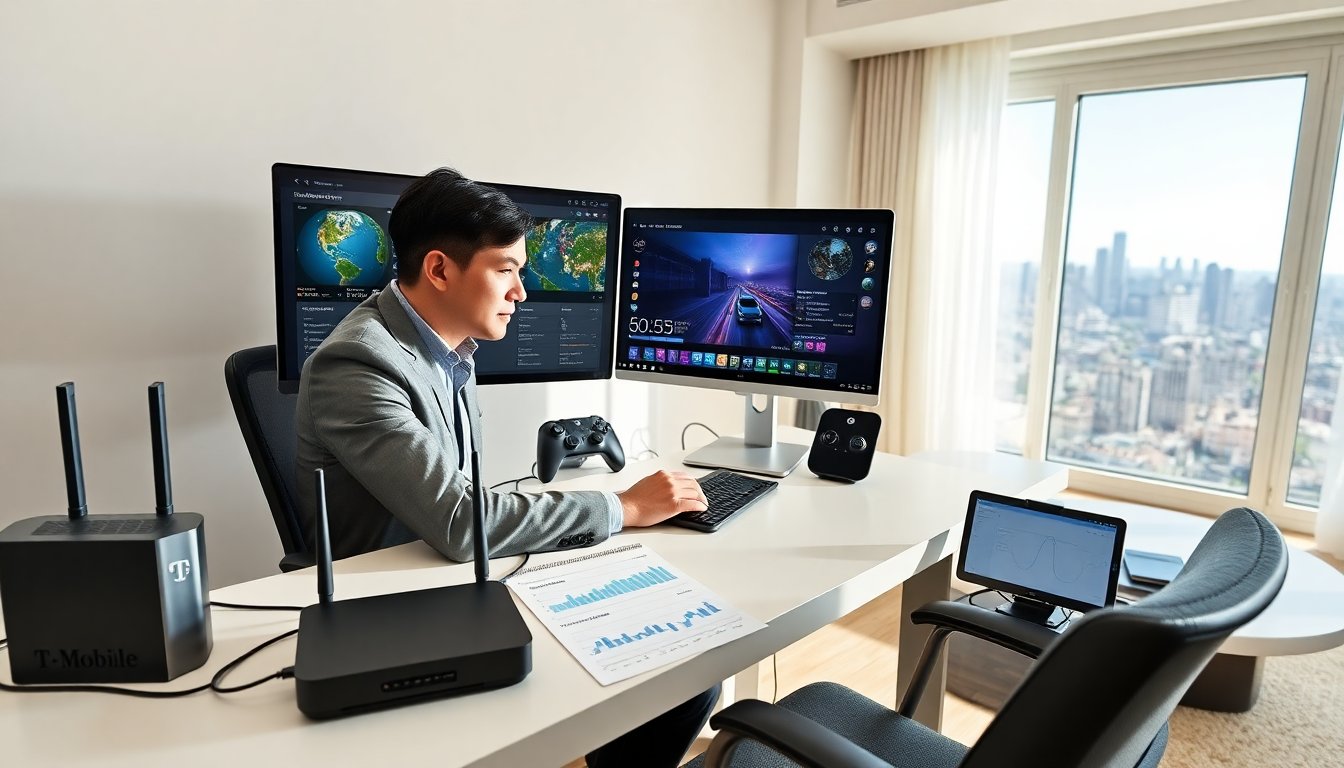
T-Mobile internet for gaming sits near the top of consumer options in 2026. Gamers want low latency, steady speeds, and stable connections. This article tests real-world results, compares plans, and lists clear setup steps. Readers will learn where T-Mobile internet for gaming fits and when they should pick a different service.
T-Mobile internet for gaming shows strong speeds in many urban areas. Tests record download speeds above 200 Mbps on 5G in cities. They record upload speeds near 30–50 Mbps for most users. T-Mobile delivers consistent throughput for single-player and many multiplayer titles.
Latency tests show mixed results. Wired fiber often gives lower ping than T-Mobile wireless. T-Mobile 5G regularly posts pings in the 20–40 ms range to nearby game servers. Home 5G and LTE connections sometimes hit 40–80 ms depending on signal and congestion. Gamers who play competitive shooters often prefer pings under 30 ms. Casual players and co-op gamers usually find T-Mobile internet for gaming acceptable.
Real-world tests use console and PC setups. They run matches on North American servers at peak evening times. Results show packet loss under 1% on good 5G connections. Poor indoor signal and network congestion push packet loss higher. T-Mobile adds network prioritization on some plans. That prioritization can reduce lag during congestion.
T-Mobile internet for gaming performs better with a clear line of sight to a 5G tower. They see big drops in performance inside concrete basements. They improve latency and speed by moving the gateway near a window and by using an external antenna. They should check local tower density and peak-hour congestion before committing to wireless-only setups.
T-Mobile internet for gaming comes in multiple plans. Home Internet plans often include unlimited data. Mobile hotspot plans include data caps and deprioritization after thresholds. Gamers must read plan fine print to avoid slowdowns during heavy use.
T-Mobile offers a higher tier with network priority for a monthly fee. That tier reduces deprioritization and improves sustained performance. T-Mobile also bundles TV and phone services in some markets. Gamers should calculate total monthly cost and compare to local fiber or cable offers.
Cost efficiency depends on play habits. A household that streams and plays heavily may save with unlimited fiber. A solo player who lives in a well-covered area may save with T-Mobile internet for gaming. They should test service during a trial period when available. Trials reveal true performance during the household peak hours.
Data caps affect large downloads and cloud gaming. Cloud gaming streams can use 5–20 GB per hour depending on resolution. T-Mobile internet for gaming with unlimited data avoids extra fees for those sessions. Gamers who frequently download large game files should prefer plans that do not throttle or cap high-volume transfers.
Gamers should pick the right gateway and router. They should use wired Ethernet for consoles and PCs when possible. A wired link reduces latency and packet loss. If they must use Wi-Fi, they should pick a Wi-Fi 6 or Wi-Fi 6E router and place it near the gaming device.
They should isolate gaming traffic with QoS settings. QoS lets the router prioritize game packets over downloads. They should enable UPnP or open the required ports for peer-to-peer games. They should update firmware on the gateway and router to fix bugs and improve throughput.
Local network tips include using shorter Ethernet cables and avoiding cheap powerline adapters for latency-sensitive play. They should test speed and ping with tools like PingPlotter and Speedtest. They should run tests during their evening peak to see real performance. They should log results to track changes after adjustments.
Players should choose alternatives when requirements exceed wireless limits. They should pick fiber when they need sub-20 ms pings and multi-gig downloads regularly. They should pick cable when fiber is not available and when consistent upload speed matters. They should keep T-Mobile internet for gaming as a viable backup when fixed lines fail. Wireless service can provide fast speeds and good coverage in many areas, but it cannot always match the lowest latency of wired connections.