Phone:
(701)814-6992
Physical address:
6296 Donnelly Plaza
Ratkeville, Bahamas.
Phone:
(701)814-6992
Physical address:
6296 Donnelly Plaza
Ratkeville, Bahamas.
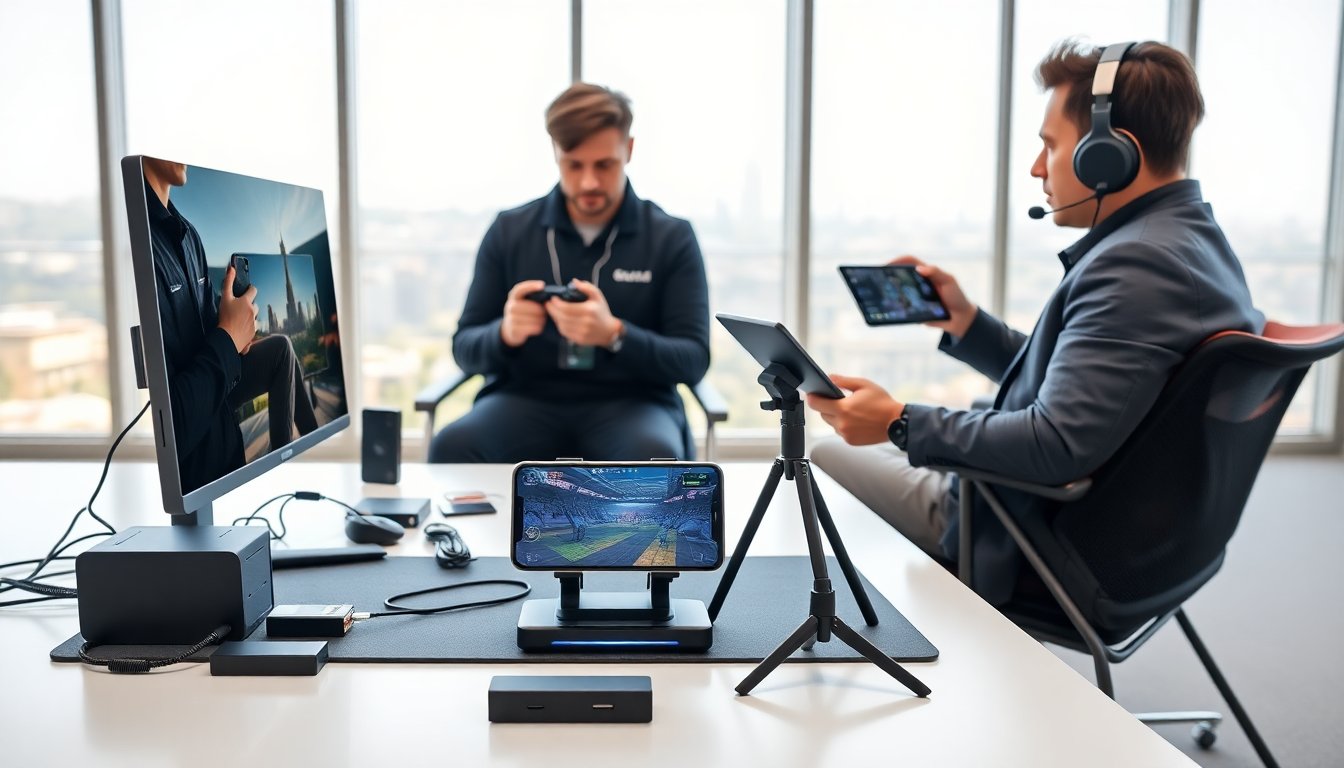
Mobile gaming setup appears in the first line to meet the keyword requirement. The reader learns what the guide covers. It lists hardware, software, and comfort tips. The guide uses clear steps and simple tips. It stays practical and action-focused. The reader can use the steps to build a fast pocket battlestation for tournaments or travel.
They pick a phone that balances CPU speed, display, and battery life. They look for a flagship or upper-midrange chip with high sustained performance. They prefer OLED or high-refresh LCD panels that support 90 Hz or 120 Hz. They choose at least 6 GB of RAM for smooth multitasking and 128 GB storage or higher for large game files. They check for active cooling or efficient thermal design to avoid thermal throttling during long sessions.
They pair the phone with a controller that fits their hands. They choose Bluetooth controllers with low input lag and hardware mapping support. They test trigger feel, stick tension, and shoulder buttons. They consider controllers that attach directly to the phone for a console-like hold. They verify cross-platform compatibility for cloud play and local games.
They plan power solutions around use patterns. They use a compact high-capacity power bank that supports USB-C Power Delivery and at least 20W output. They carry a wall charger rated for 30W or higher to charge quickly between sessions. They use short, high-quality USB-C cables to reduce charging heat and loss. They keep a USB hub when they need wired Ethernet, a headset, or external SSDs.
They add storage and display options as needed. They use microSD or external SSDs for large game libraries when the phone supports them. They connect to a portable OLED or 1080p monitor via USB-C for live spectating or split-screen streaming. They ensure the phone supports DisplayPort Alt Mode before buying a monitor cable. They confirm all devices work together before a tournament or trip.
They update the phone and games to the latest stable builds. They enable game mode or performance mode to prioritize CPU and GPU. They close background apps before starting a session. They disable battery saver and limit notifications to avoid interruptions.
They tune in-game settings for a balance of frame rate and visual clarity. They lower shadow and post-processing quality to keep frame rates steady. They lock frame rate if the game supports it to avoid sudden drops. They set the resolution one step below native when thermal limits appear. They clear cache for games that show stutter.
They test controller mapping and vibration settings in each title. They set dead zones to prevent drift and adjust sensitivity to suit aiming style. They save control presets for different genres, such as shooters and racers. They sync controller firmware when updates appear.
They secure the best network path for online play. They use 5 GHz Wi-Fi when possible for lower latency and higher bandwidth. They place the router near the play area or use a travel router with 5 GHz support. They reduce network noise by pausing large downloads on other devices. They use a wired Ethernet adapter for the phone when the venue supports it.
They use cloud gaming when local hardware limits performance. They pick a nearby server region and test latency before a session. They choose a cloud service that supports 60 Hz or higher streams and hardware controller pass-through. They measure ping and jitter with simple network tools and change servers if numbers exceed target values.
They set up a compact chair and a small foldable stand for the phone. They keep the screen at eye level to reduce neck strain. They use a controller grip or clip that supports a natural wrist angle. They place the hands so the shoulders stay relaxed.
They pick accessories that reduce fatigue. They use lightweight over-ear or in-ear gaming headsets with clear mic pickup. They carry extra ear tips and a small mic windscreen for noisy venues. They add a clip-on LED or lamp for consistent lighting during streams. They keep a microfiber cloth for quick screen cleaning.
They protect the phone with a slim case that aids heat dissipation. They avoid thick cases that trap heat. They add a small cooling pad or clip-on fan for marathon sessions. They pack a foldable desk mat to keep the controller stable on uneven surfaces.
They pack smart small items for travel. They bring a cable organizer to avoid tangles. They store spare cables and a compact surge protector in a soft pouch. They carry a compact tripod when they plan to stream or record. They include a travel power strip with USB-C outlets for charging multiple devices at once.
They plan short breaks to reduce strain and keep focus. They set alarms for posture shifts and eye rest. They hydrate and snack to maintain steady energy. They test the full setup at home to avoid surprises in the field.